
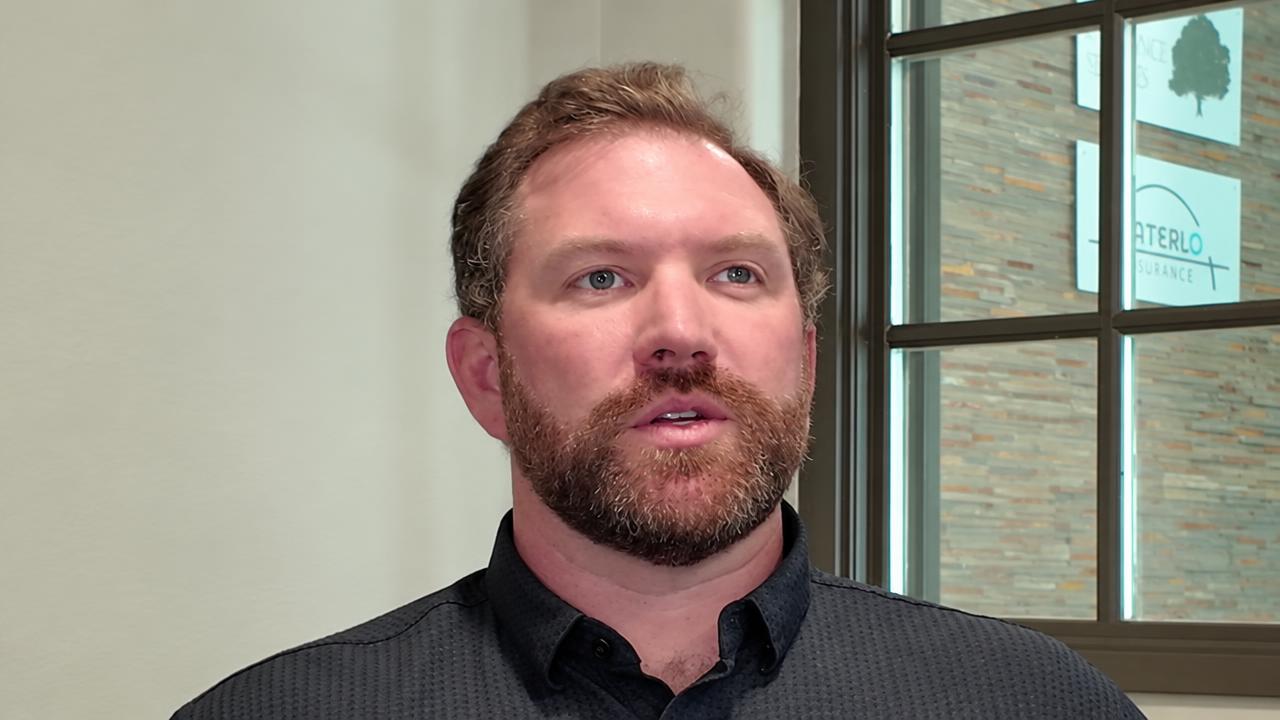
“I think AI is not going to solve every problem and not going to be perfect for every problem, but they kind of helped me figure out the specific things within our business that could be helped by this.”
Every business owner I talk to knows AI will change how we work. Most are still stuck on a practical question: where do I actually start? For insurance agencies, the answer is often hiding in the renewal process.
There's no shortage of AI tools or promises. What's missing is a clear link between the technology and the everyday work that slows a business down. We saw that firsthand with Chris Agness, President of Waterloo Insurance, a commercial property and casualty agency in Austin, Texas.
Chris wasn't looking to reinvent his agency with AI. He wanted to give his team more time for what they do best: taking care of clients. That distinction made all the difference.
The Renewal Proposal Bottleneck at Insurance Agencies
Waterloo Insurance serves businesses with $5 million to $500 million in revenue. Many are family-owned, with relationships that span generations. In a business built on trust, Chris knew his team's time was one of his most valuable resources.
But like most commercial insurance agencies, Waterloo carried a heavy load of repetitive administrative work. Preparing a renewal proposal meant pulling data from multiple carrier quotes, comparing policies, reviewing loss runs and assembling everything by hand in Word.
Some policies ran to 1,000 pages, though only a small fraction mattered for the task at hand. Every client change could mean another round of edits. When renewal deadlines stacked up, the workload got even harder.
Chris wasn't asking how to replace employees with AI. He was asking how to give the people he already had more capacity to serve clients and grow the business. That's a problem worth solving.
Mapping the Process Before Choosing AI
One of the biggest mistakes I see is starting with technology. A business buys an AI tool, adds another platform and hopes employees figure it out. But new software doesn't automatically remove work. Sometimes it creates more.
With Chris and his team, we started by mapping their existing process:
- Where was time being spent?
- Which tasks were repetitive?
- Where was information being moved by hand?
- Which steps still needed human judgment?
Renewal proposal preparation stood out as the right place to start. Instead of asking Waterloo to change how its people worked, we built an AI co-worker around the way they already did business. Her name is Pam.
Meet Pam: An AI Co-worker That Works Through Email
Pam doesn't require Waterloo's team to learn new software or log into another system. She works through email. When carrier quotes arrive, an account manager forwards them to Pam and asks for the renewal materials they need.
Pam automates three core renewal deliverables:
- Renewal proposals: combines data from multiple carriers and lines of business into Waterloo's branded proposal format.
- Premium comparisons: compares current renewal quotes against last year's signed proposal, including pricing and exposures.
- Loss analysis: consolidates five years of loss runs from multiple carriers into one document with charts and graphs.
Need a change? The team replies to Pam's email and asks for a revision.
Pam handles the repetitive document work. Waterloo's people stay responsible for reviewing the numbers, making decisions and advising clients. That's how we believe AI should work: not as another piece of software your team has to manage, but as a co-worker that takes work off their plate.
Results: What Waterloo Gained From AI Automation
Six months in, Waterloo's renewal process is noticeably faster and easier to manage:
- Faster proposals: preparing a renewal proposal dropped from hours to minutes.
- Easier revisions: client changes no longer mean rebuilding documents from scratch.
- Flexible coverage: when an account manager is out or overloaded, a teammate can pick up the renewal and keep it moving.
- Visible adoption: Chris gets weekly reports showing the team generates considerably more proposals and comparisons a week.
What stood out to me most wasn't the speed. It was what the team did with the time they got back. As Chris put it:
"It allows us to give more time and effort to those things that do need the human touch."
That's the outcome we work toward at Converge. AI shouldn't take the human element out of a business. It should give people more time for work where their experience, judgment and relationships matter most.
For Waterloo, that means more time with clients. For another business, it might mean faster customer responses, smoother order processing or taking on more work without more overhead. The process changes; the goal stays the same: more capacity.
Why AI Adoption Fails, and How Waterloo Avoided It
Chris had been here before. He'd invested in software that looked great in the demo but went unused once employees had to learn a new platform or change their routines. We wanted to avoid that.
Pam fits into tools Waterloo's team already uses. Nobody had to become an AI expert. They needed to know how to send an email, review the results and ask for changes.
Some employees were skeptical at first, which is natural whenever a business introduces AI. As they used Pam, they saw how it supported their work rather than threatened it. Chris was clear from day one: replacing people wasn't the goal. Helping them work more efficiently was.
That distinction matters most for small and midsize businesses, where experienced employees and client relationships drive growth.
Where Small Businesses Should Start With AI: 3 Questions
What I appreciate about Chris is that he ignored the AI hype and focused on the business. He knew his team had repetitive work, and he wanted a practical way to make it easier. We started with one process, built around his team's needs, and measured whether it was used. Now Waterloo is exploring a second process.
That's how meaningful AI adoption happens: not through a massive overhaul, but through small, practical wins that build on each other. If you're wondering where to begin, ask yourself three questions:
- 1What repetitive work is taking time away from my team? Look for documents, data entry, comparisons, reporting or information moving between systems.
- 2Could that work be handled without changing how my employees operate? The easier a solution is to use, the more likely your team will adopt it.
- 3What would my business gain if we got those hours back? More client time? Faster turnaround? Room to grow?
You don't need to automate your entire business. You need to find one process worth improving.
AI Should Fit Your Business, Not the Other Way Around
Working with Chris and the Waterloo team reinforced something we believe at Converge: small and midsize businesses don't need technology for its own sake. They need practical solutions that make their existing teams more productive. That's why we build AI co-workers around the processes and systems your people already use.
Waterloo's story isn't about replacing people with AI. It's about helping a successful insurance agency make better use of its most valuable resource: its people. That's where the real opportunity with AI begins.
Curious what an AI co-worker could take off your team's plate? In 25 minutes, we'll learn about your business and identify one repetitive process worth automating. If there's a fit, we'll show you what's possible. If there isn't, we'll tell you.
Book My CallAbout the author
Brian Simmons is the CEO of Converge, which builds AI co-workers for small and midsize businesses that work through tools teams already use, like email. With over 25 years in technology, Brian is focused on helping small and midsize businesses take back their time.

Get the next post when it lands: follow Converge on LinkedIn